Phra That Hariphunchai Temple Travel Guide for Lamphun
Plan a thoughtful visit to Lamphun’s celebrated shrine and discover two nearby temples with deep Hariphunchai connections
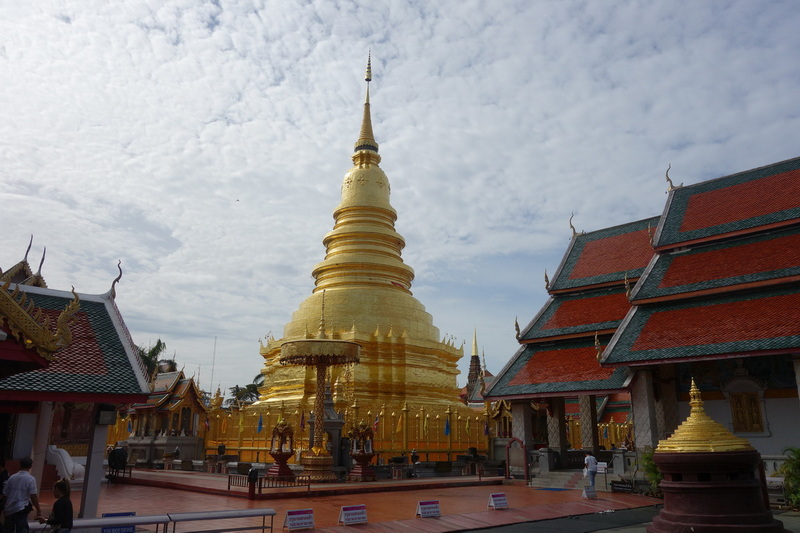
Among the Must Visit Temples In Northern Thailand, Phra That Hariphunchai Temple offers a particularly strong connection between living Buddhist practice, regional history, and the old city of Lamphun. It is not simply a landmark to photograph on a day trip. The temple remains an active sacred place, and its importance is best understood by allowing time for observation, quiet appreciation, and respectful participation in the atmosphere around the central shrine. For first-time visitors, the temple also provides a useful starting point for exploring Lamphun beyond the better-known routes of northern Thailand. Its formal name, Wat Phra That Haripunchai Woramahawihan, appears in different spellings, while visitors may also see names such as Wat Phrathat Hariphunchai, Hariphunchai Temple, or Wat Hariphunchai. This guide focuses on how to plan a meaningful visit, what architectural and cultural details deserve attention, and how to connect the temple with Wat Phra Yuen and Wat Chamadevi.
Begin with Lamphun rather than treating the temple as a quick stop
A visit to Phra That Hariphunchai Temple makes most sense within the historic setting of Mueang Lamphun District, Lamphun. The city developed around the ancient Hariphunchai kingdom, an important Mon cultural center whose influence remains visible in local religious sites and artistic traditions. The temple stands in the urban heart of Lamphun, so reaching it usually forms part of a broader town visit rather than an isolated excursion into the countryside.
Travelers using a Lamphun Thailand Travel Guide should allow time for a calm temple visit and a walk through the surrounding historic area. Approaching without rushing makes it easier to notice changes in architectural scale, the relationship between the main chedi and surrounding buildings, and the way worshippers move through the compound. Visitors coming from Chiang Mai can make Lamphun a day trip, although staying longer allows a more measured look at several related heritage sites.
Because this is an active religious complex, practical preparation is simple but important. Wear clothing that covers the shoulders and knees, choose comfortable footwear, and be ready to remove shoes where signs or local practice indicate. Photography should never take priority over prayer, ceremonies, or the privacy of worshippers. If a particular building is closed or an area is reserved for religious use, follow the posted guidance and observe from outside.
Why Wat Hariphunchai Woramahawihan is notable
The significance of Wat Hariphunchai Woramahawihan comes from the way it embodies Lamphun’s religious and historical identity. The temple is associated with the ancient city of Hariphunchai and is regarded as one of the region’s principal Buddhist sanctuaries. Local tradition connects the central relic shrine with the presence of a Buddha relic, giving the site importance for devotees as well as for visitors interested in northern Thai heritage.
The temple’s name is often rendered in several forms in English. Phra That Hariphunchai, Phrathat Hariphunchai, and Wat Phra That Hariphunchai all refer to the same major destination in Lamphun. These variations can be useful when reading maps, signs, or regional travel information, but the identity of the place is consistent: it is the city’s best-known religious landmark and a continuing center of devotion.
Its historical layers also reflect the changing cultural landscape of northern Thailand. Hariphunchai traditions are linked with Mon heritage, while later Lanna influence can be seen in the temple’s architectural language and artistic details. Rather than presenting one single moment in history, the complex shows how religious places are maintained, restored, and reinterpreted across generations. That continuity is part of what makes the temple more meaningful than a standalone monument.
Look closely at the chedi and the surrounding compound
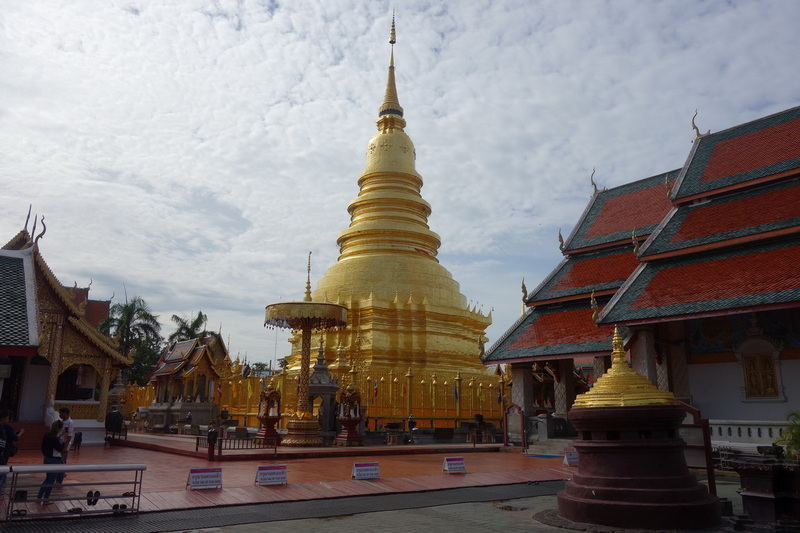
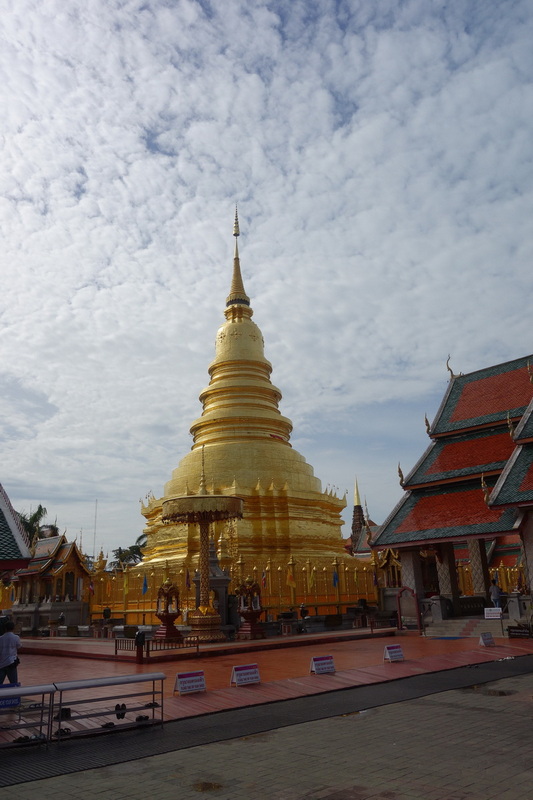
The central golden chedi is the visual focus of the temple. Its tall, elegant profile can be seen above the surrounding structures, and its surface catches changing light throughout the day. The chedi is not merely an architectural centerpiece; it is a sacred focus for worship and a reminder that the temple’s importance is rooted in religious belief. Visitors should observe the central shrine with the same care they would bring to any active place of worship.
Move slowly around the grounds to appreciate the contrast between the principal chedi, lower rooflines, decorative details, and open devotional spaces. Northern Thai temples often reward close attention to small features: roof finials, carved or gilded elements, guardian figures, entrance details, and the arrangement of buildings around a sacred center. Some details may be familiar from other temples, but their combination here reflects Lamphun’s particular historical character.
The compound can also be understood through sound and movement. Bells, quiet conversations, footsteps, incense, and visitors making offerings may all form part of the experience, depending on the time of the visit. There is no need to imitate religious actions unless invited or personally appropriate. Standing to one side, lowering your voice, and allowing worshippers to pass are simple ways to remain an attentive guest.
For travelers comparing Must Visit Temples In Northern Thailand, the appeal of Phra That Hariphunchai Temple lies in this balance between visual presence and continuing function. It has recognizable architectural features, but it is not presented as a museum detached from local life. The most rewarding visit is therefore one that combines looking with listening and cultural awareness.
A respectful way to experience the temple
International visitors do not need specialist knowledge to behave appropriately. Dress modestly, remove hats when entering appropriate interior spaces, and avoid pointing your feet toward Buddha images or sacred objects. A wai, a quiet greeting, or simply a respectful pause can communicate consideration, but visitors should not feel pressured to perform unfamiliar customs. Observing how local worshippers behave is often the clearest guide.
Ask before photographing people, monks, ceremonies, or close-up devotional activity. Avoid climbing on structures, touching sacred objects, or using a flash where it could disturb worshippers or damage sensitive surfaces. Selfies are best kept away from prayer areas, and a posed image should never suggest disrespect toward a Buddha image or shrine. These choices help preserve the dignity of the place and the experience of those who come to worship.
The temple may feel busiest during religious occasions or local festivals, when its role as a community gathering place becomes especially clear. Visitors who encounter a ceremony should remain at the edge unless invited closer, keep pathways open, and accept that some areas may have limited access. Conditions can change, so it is sensible to check current local information before planning around a specific event rather than assuming a fixed schedule.
A practical visit does not need to be long or hurried. Begin with an overview from a respectful distance, identify the main shrine, then spend time noticing the compound’s secondary details. If you are traveling with companions, agree on a meeting point outside a quiet prayer area. This small step makes the visit easier without turning the temple into a purely logistical stop.
Use the temple as the center of a heritage-focused route
Phra That Hariphunchai Temple works well as the anchor of a Lamphun itinerary because it introduces the city’s religious landscape in one concentrated setting. After seeing the main shrine, travelers can continue to other historic temples and monuments rather than returning immediately to a larger city. This approach gives context to the region’s layered history and makes the journey feel connected rather than like a list of unrelated stops.
Allow some unscheduled time between sites. Lamphun’s heritage is experienced through scale and atmosphere as much as through individual monuments, and a short pause for a local meal or a quiet walk can help distinguish the town from faster-paced tourist centers. Keep the focus on respectful observation: local neighborhoods are lived-in places, not scenery arranged for visitors.
When planning transport, confirm the day’s route and allow flexibility for traffic, weather, religious activity, and time spent at each site. Operational details such as opening arrangements can change, especially around ceremonies or restoration work. Checking current information locally is more reliable than depending on an old timetable. The temple itself is the reason to visit, but the wider value of Lamphun lies in seeing how sacred places remain connected to an active town.
Nearby Attractions
Wat Phra Yuen
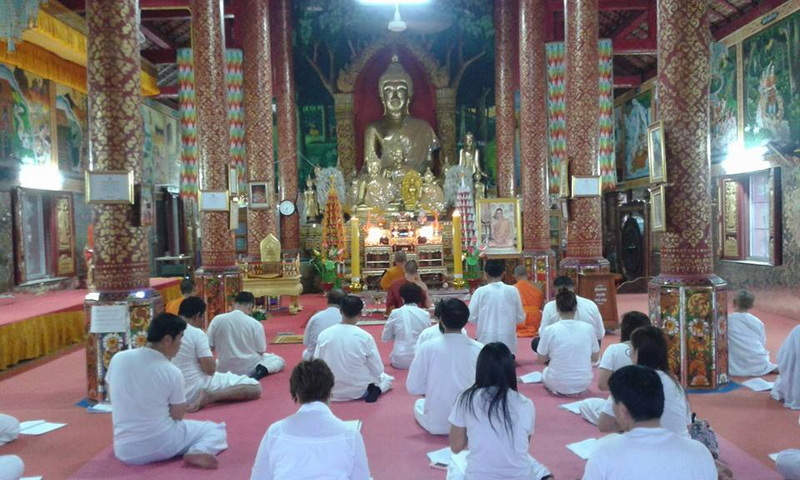
Wat Phra Yuen provides a complementary stop for travelers interested in the religious history of Lamphun. Its distinctive chedi and temple setting offer another opportunity to observe how northern Thai and older regional traditions appear together in local architecture. Compared with the highly prominent central shrine at Phra That Hariphunchai Temple, a visit here can encourage closer attention to form, proportion, and the arrangement of the surrounding grounds.
Include Wat Phra Yuen when you want your Lamphun route to move beyond one famous landmark. Maintain the same etiquette: dress respectfully, keep voices low, and follow any guidance about photography or access. The site is most valuable when approached as a living temple rather than simply another item to check off.
Wat Chamadevi
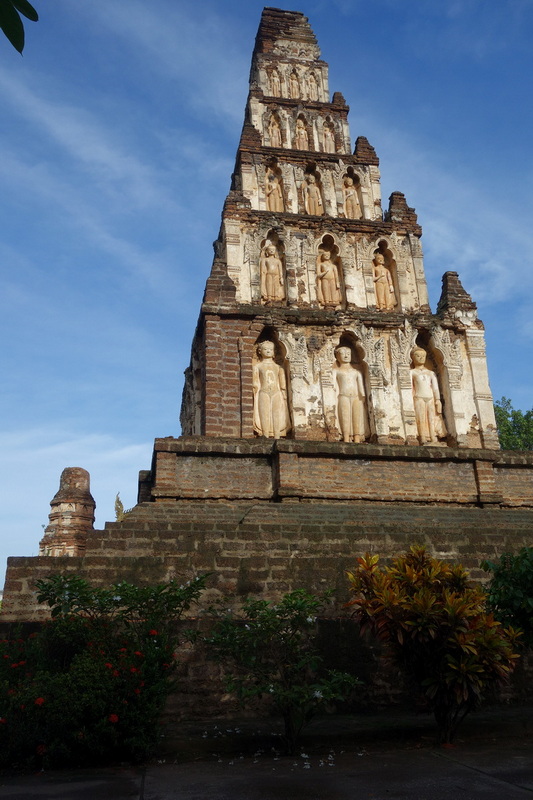
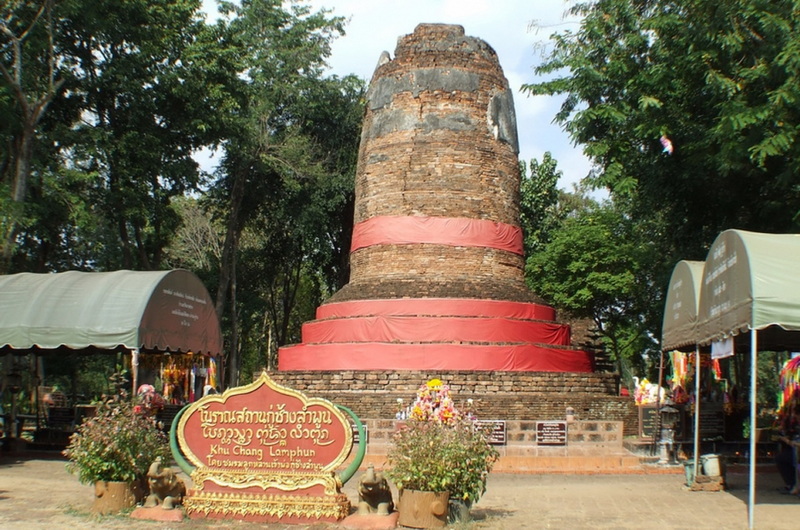
Wat Chamadevi is closely associated with Lamphun’s early history and is an important place for understanding the city’s Hariphunchai heritage. Its historic chedi has a different visual character from the tall golden centerpiece of Wat Hariphunchai, making the two sites useful comparisons for travelers curious about regional architectural development and religious symbolism.
A visit to Wat Chamadevi can deepen the historical context introduced at Phra That Hariphunchai Temple. Take time to look at the brickwork, vertical form, and surrounding devotional environment without assuming that every feature can be understood from appearance alone. Reading local information or asking a knowledgeable guide respectfully can add context while keeping the visit grounded in the site’s religious significance.
Planning Your Visit
Phra That Hariphunchai Temple is a strong choice for travelers seeking a notable northern Thai temple with genuine historical depth and an active spiritual role. Plan around respect rather than speed, give the central chedi your attention, and use nearby Wat Phra Yuen and Wat Chamadevi to understand Lamphun as a connected heritage landscape. With modest clothing, considerate behavior, and flexible timing, a visit becomes more than sightseeing: it becomes a careful introduction to the enduring identity of Hariphunchai.
